Foundations of Prevention
Prevention is a multi-faceted process — this page outlines foundational concepts and terms for prevention work in Vermont.
Continuum of Care
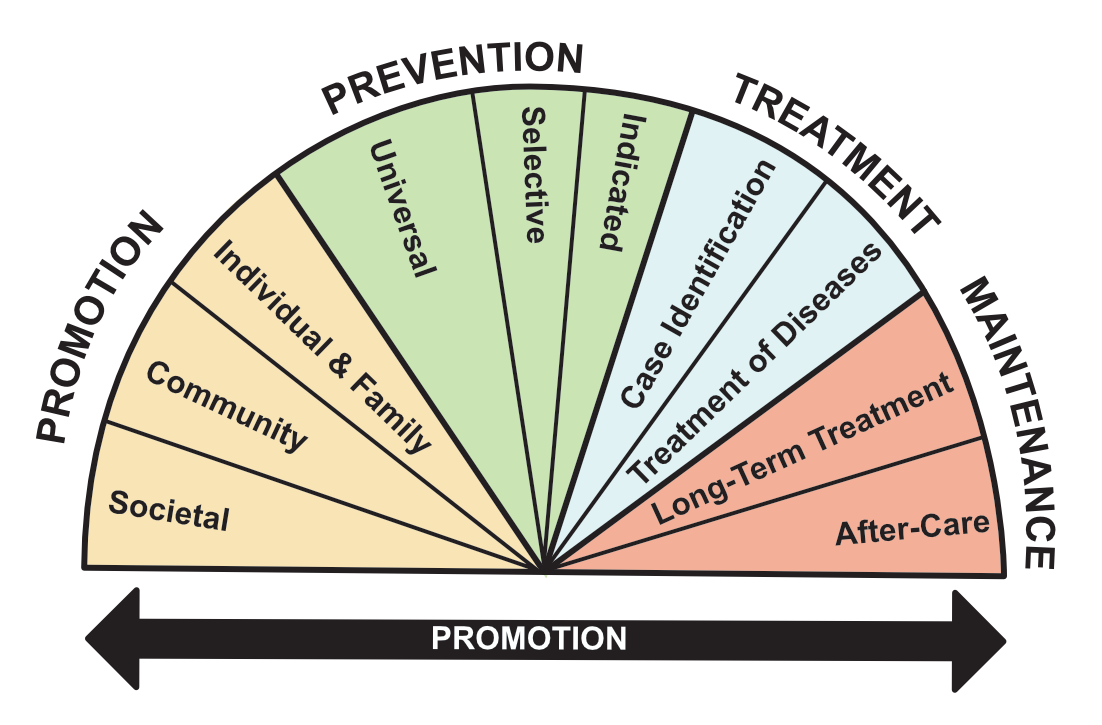
The continuum of care describes the scope of behavioral health services for individuals before, during, and after they experience a behavioral health problem or disorder.
The continuum covers 4 phases:
Promotion
Prevention
Treatment
Maintenance
Prevention Strategies fall into three categories:
-
Target: The entire population.
Universal prevention strategies are delivered to everyone in a specific group (like a school, a workplace, or a whole community) regardless of their individual risk level. The goal is to provide everyone with the same basic tools or information to prevent a problem before it starts.
Key Characteristic: No screening is required.
Examples:
Public service announcements about the dangers of vaping.
Adding fluoride to community drinking water.
Social-emotional learning (SEL) curriculums taught to all students in a school district.
-
Target: Specific subgroups at higher risk.
Selective prevention focuses on individuals or groups who have a higher-than-average risk of developing a disorder. This risk is usually based on biological, psychological, or social factors (like family history or living environment) rather than their current behavior.
Key Characteristic: Participants are chosen because they belong to a group that faces more challenges, even if they aren't personally showing symptoms yet.
Examples:
Mentoring programs for children whose parents have a history of substance abuse.
Support groups for families living in high-poverty areas.
Health screenings specifically for people with a genetic predisposition to a certain disease.
-
Target: High-risk individuals showing early warning signs.
Indicated prevention is designed for people who are already starting to exhibit early "red flags" or sub-clinical symptoms. These individuals do not yet meet the full diagnostic criteria for a disorder, but they are clearly on a trajectory toward one.
Key Characteristic: Identification through individual screening for specific behaviors or symptoms.
Examples:
An intervention program for students who have started skipping class and getting into frequent fights.
Smoking cessation counseling for "social smokers" who are showing early signs of respiratory issues.
Cognitive behavioral therapy for individuals showing minor symptoms of depression.
Vermont Prevention Model
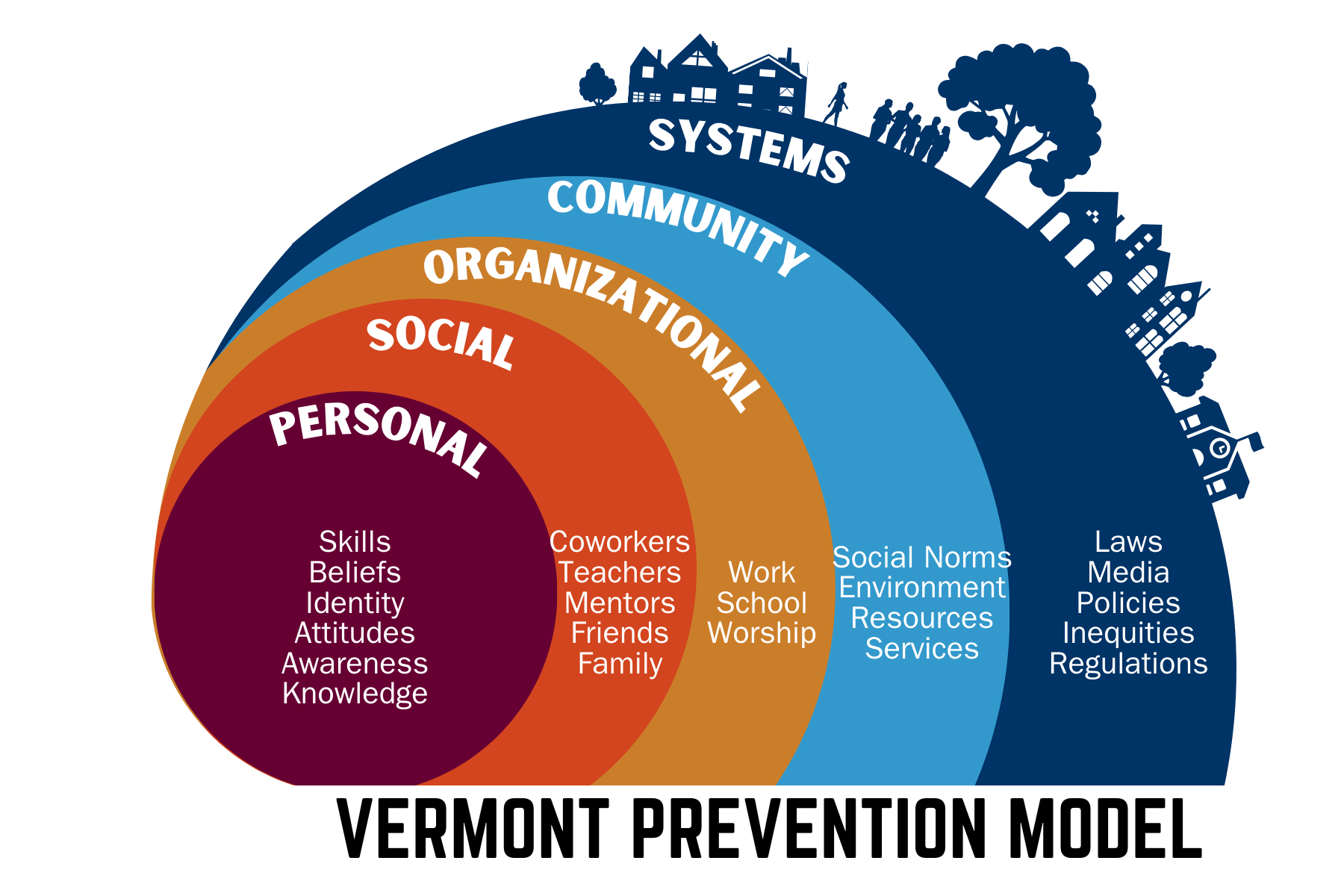
This model depicts five different levels of environmental and personal factors that can influence behavior and health outcomes including policies and systems, community, organizations, relationships, and individual.
It takes a combination of actions, sustained over time, to prevent and reduce alcohol and other substance use. Prevention strategies are most likely to succeed if they reach people holistically in all the environments in which they live: individual, family, school, community, and state level. The Vermont Prevention Model is a visual depiction of this holistic, or comprehensive framework and is the basis for Vermont Department of Health’s Division of Substance Use prevention efforts.
-
Genetic Predisposition: A family history of addiction or mental health disorders.
Early Onset: Using substances at a young age, which can impact brain development.
Psychological Traits: High impulsivity, low self-esteem, or untreated mental health conditions.
Trauma History: Exposure to adverse childhood experiences (ACEs), such as physical or emotional abuse.
Lack of Supervision: Little to no parental monitoring of activities and peer groups.
Substance Use in the Home: Parents or older siblings modeling drug or alcohol use.
High Conflict: Frequent domestic disputes or a lack of emotional bonding within the family.
Peer Pressure: Associating with friends who use or encourage the use of substances.
Academic Struggles: Frequent school failure or a lack of commitment to education.
Social Isolation: Feeling rejected or disconnected from peers or the community.
Availability: Easy access to alcohol, tobacco, or illegal drugs.
Community Norms: A local culture that views substance use as acceptable or common.
Economic Deprivation: Living in areas with high poverty and limited opportunity.
-
Self-Control: The ability to regulate emotions and resist impulsive behaviors.
Positive Self-Image: A strong sense of self-worth and confidence in decision-making.
Coping Skills: Having healthy strategies to deal with stress and setbacks.
Strong Parental Bonds: A warm, supportive relationship with at least one consistent caregiver.
Clear Boundaries: Consistent rules and expectations regarding substance use.
Parental Involvement: Caregivers who are active and interested in daily life.
Pro-Social Friendships: Associating with peers who value healthy behaviors and school success.
School Connectedness: Feeling a sense of belonging and support from teachers and staff.
Extracurricular Engagement: Involvement in sports, arts, or clubs that provide a sense of purpose.
Safe Neighborhoods: Communities with low crime and high levels of physical safety.
Access to Resources: Availability of quality healthcare and mental health services.
Strong Community Standards: Clear public policies and social norms that discourage substance misuse.
Strategic Prevention Framework
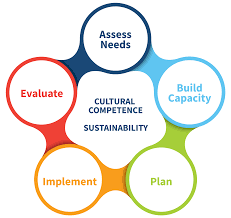
Prevention planners are pressed to put in place solutions to urgent substance use problems facing their communities. But research and experience have shown that prevention must begin with an understanding of these complex behavioral health problems within their complex environmental contexts; only then can communities establish and implement effective plans to address substance misuse.
The five steps (outer circles) and two guiding principles of the SPF offer a comprehensive approach to understanding and addressing the substance use and related behavioral health problems facing states and communities.